
Some Natural Extracts With Neuroprotective Properties
Mar 15, 2023
The nervous system is very important to us humans. It is like a center of communication and connection, closely connecting all parts of our body to form a harmonious whole. On the one hand, it controls and regulates the activities of various organs and systems, making the human body a unified whole. On the one hand, through analysis and synthesis, the body responds to the stimuli of environmental changes, so as to achieve the unity of the body and the environment.

Click to cistanche tubulosa capsules for neuroprotection
Therefore, the nervous system is a very important part of the human body, so what can protect and nourish the nerves?
Luteolin
Anti-Aging
Luteolin is a flavonoid abundant in the human diet. The paper The Evaluation of Geroprotective Effects of Selected Flavonoids in Drosophila melanogaster and Caenorhabditis elegans mentioned: "Flavonoids are a group of well-studied natural compounds with antioxidant, anti- Tumor, antihyperglycemic, cardioprotective and neuroprotective properties."

The paper found that luteolin can prolong the lifespan of Caenorhabditis elegans and female Drosophila melanogaster and has potential anti-aging effects.
neuroprotection
Dietary Luteolin Reduces Proinflammatory Microglia in the Brain of Senescent Mice states: "The flavonoid luteolin reduces neuroinflammation and improves learning and memory in aged mice."
At the same time, this paper found that dietary supplementation with luteolin suppressed the activity of brain microglia and thus suppressed neuroinflammation during adult aging and LPS activation.
The neuroprotective effect of luteolin also includes the inhibition of fear, Luteolin reduces fear, anxiety, and depression in rats with post-traumatic stress disorder (luteolin reduces fear, anxiety, and depression in rats with post-traumatic stress disorder) Luteolin administration restores increased norepinephrine and decreased serotonin levels in fear circuits, medial prefrontal cortex, and hippocampal structures in rats exposed to chronic stress and exhibits antidepressant and anxiolytic effects.

In addition, luteolin has the potential to improve brain fog after COVID-19. Long-term-COVID syndrome symptoms, especially brain fog, are associated with patients undergoing chemotherapy for cancer, and patients with myalgic encephalomyelitis/chronic fatigue syndrome (ME/CFS) or mast cell activation syndrome (MCAS) experienced symptoms that are similar.
The pathogenesis of brain fog in these disorders is currently unknown but may involve neuroinflammation, in which mast cells, stimulated by pathogens and stress, release mediators that activate microglia and lead to inflammation in the hypothalamus. These processes can be alleviated by a phytosomal preparation (in olive pomace oil) of the natural flavonoid luteolin.
Antiviral
The interaction between the receptor-binding domain (RBD) of SARS-CoV-2 and angiotensin-converting enzyme 2 (ACE2) is critical for viral entry and subsequent replication.
A study found that luteolin exhibits strong allosteric effects when bound to a previously unidentified distal binding site of the RBD domain away from the RBD and ACE2 interface, which could be a potential target for future drug discovery.
Furthermore, among the SARS-CoV-2 viral proteins, RNA-dependent RNA polymerase (RdRp) is responsible for viral genome replication and has become one of the most promising targets for drug intervention against SARS-CoV-2.
The paper Quercetin and luteolin are single-digit micromolar inhibitors of the SARS-CoV-2 RNA-dependent RNA polymerase found that luteolin and quercetin have the ability to inhibit the RdRp enzyme. Luteolin inhibited SARS-CoV-2 RdRp with an IC50 of 4.6 ± 0.3 µM, and that of quercetin with an IC50 of 6.9 ± 1.0 µM.
Delay gonadal aging
Improvement of Testicular Steroidogenesis Using Flavonoids and Isoflavonoids for Prevention of Late-Onset Male Hypogonadism points out that flavonoids and isoflavones, such as chrysin, apigenin, luteolin, quercetin and daidzein, can effectively delay the Development of late-onset hypogonadism associated with aging in men. Luteolin activates StAR expression and leads to increased progesterone and testosterone synthesis in LC540 stromal cells.

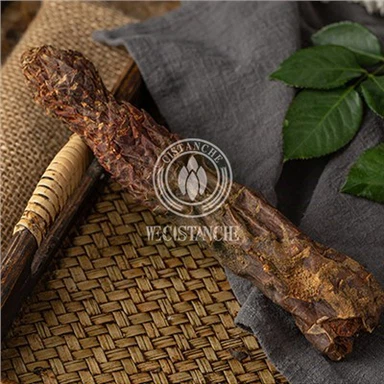
Cistanche neuroprotection effect
Cistanche is a plant extract known for its neuroprotective properties, and its mechanism of action is believed to involve antioxidant, anti-inflammatory, and antiapoptotic effects. There are several relevant tests and application cases related to the neuroprotective effects of Cistanche, which include:
1. In vitro studies: In vitro studies have shown that Cistanche extract protects neurons from stress-induced damage by reducing oxidative stress and inflammation.
2. Animal studies: Animal studies have demonstrated that Cistanche can protect against neuronal damage caused by cerebral ischemia, traumatic brain injury, and neurotoxin exposure.
3. Human studies: There is limited clinical evidence on the neuroprotective effects of Cistanche in humans, but some studies have suggested that it may improve cognitive function and reduce age-related decline in memory.
References:
1. Li, W., Liang, S., Liu, Z., Yuan, B., Qiang, W., & Xia, W. (2017). Protective effect of echinacoside, one of the phenylethanoid glycosides, on H2O2-induced cytotoxicity in PC12 cells. Biomedicine & Pharmacotherapy, 91, 296-304.
2. Zhang, L., Yu, H., Zhao, X., Lin, X., Tan, C., Cao, G., ... & Han, Y. (2016). Neuroprotective effects of echinacoside in the mouse MPTP model of Parkinson's disease. European Journal of Pharmacology, 797, 78-85.
3. He, X., Wang, Y., & Yang, M. (2016). Protective effect of cistanche total glycosides on cerebral ischemia reperfusion injury through inhibiting the activation of JNK signal pathway. International Journal of Clinical and Experimental Medicine, 9(2), 3022-3032.
4. Zhang, P., & Koves, E. S. (2017). Neuroprotective effects of cistanche and its active ingredients. Herbal Medicine, 3(2), 67-73.